
Why this requirement matters in Australia
Buyers in Australia often compare developers on price, delivery time, mobile quality, ownership, support, and whether the website can turn visits into enquiries or sales. The useful decision is not simply “who can build a website?” but “which build solves low visibility for local searches, weak service pages, poor location signals, and content that does not match buyer intent for a restaurants operation?”
The site should be prepared for AUD pricing where relevant, local contact expectations, and searches in English. A useful local-language search pattern for this topic is: local SEO website development Australia.
What the website should solve
Create one useful page per real service or location intent instead of hundreds of near-duplicate pages. Each page should answer pricing, process, suitability, proof, FAQs, and next steps.
Use descriptive titles, internal links, structured data where appropriate, fast mobile performance, image alt text, and consistent business or contact information.
For multilingual search, use human-reviewed translations, dedicated URLs, appropriate hreflang, and local wording. Do not mix several languages on one page unless it genuinely helps the user.
Recommended project structure
- Discovery: goals, audience, competitors, language, country or city targeting, and conversion path.
- Content: homepage, service or product pages, proof, FAQs, policies, and contact or booking pages.
- Build: responsive UI, accessible components, secure forms, speed optimisation, and required integrations.
- Search: metadata, canonical URLs, sitemap, internal links, structured data, and location or language signals.
- QA: mobile and desktop testing, browser checks, forms, analytics, social previews, redirects, and backups.
Buyer checklist before hiring a developer
- Define the primary conversion: purchase, booking, quote, call, WhatsApp message, demo, or enquiry.
- Confirm the target audience in Australia, including language and mobile usage expectations.
- Agree on pages, integrations, content ownership, revisions, launch support, and ongoing maintenance.
- Test forms, payments or booking, email delivery, analytics, redirects, metadata, and social sharing before launch.
- Measure real outcomes after launch and improve the pages that receive traffic but do not convert.
Local compliance and trust
For Australia, review applicable privacy, consumer, accessibility, and ecommerce obligations before launch.
Use accurate business claims and publish only pricing, guarantees, testimonials, certifications, delivery promises, medical or legal statements, and performance claims that you can support.
How WebsiteIn5000 can approach this project
A practical build can combine mobile-first design, country-aware currency presentation, clear service structure, social sharing metadata, SEO-ready templates, analytics, and the integrations required by the business. The exact scope should be confirmed before development so the quote matches the real requirement.
Compare website plans · See portfolio · Request a project discussion
Need a website plan based on your actual requirements?
Compare current website plans, review previous work, or discuss your project directly before ordering. Pricing is synchronized for India · INR.
Frequently Asked Questions
How much does this type of website cost in Australia?
Cost depends on scope, page count, content, integrations, ecommerce or booking functions, design complexity, SEO work and support. Ask for a written scope and a quote in the appropriate currency (AUD where applicable).
Should a restaurants website in Australia be mobile-first?
Yes. Design the primary enquiry or purchase journey for small screens first, then verify it on tablet and desktop.
Can the website target local-language searches in Australia?
Yes. Use dedicated, human-reviewed language pages with clear URLs, localized wording and appropriate hreflang rather than mixing machine-translated text into one page.
Related Website Guides
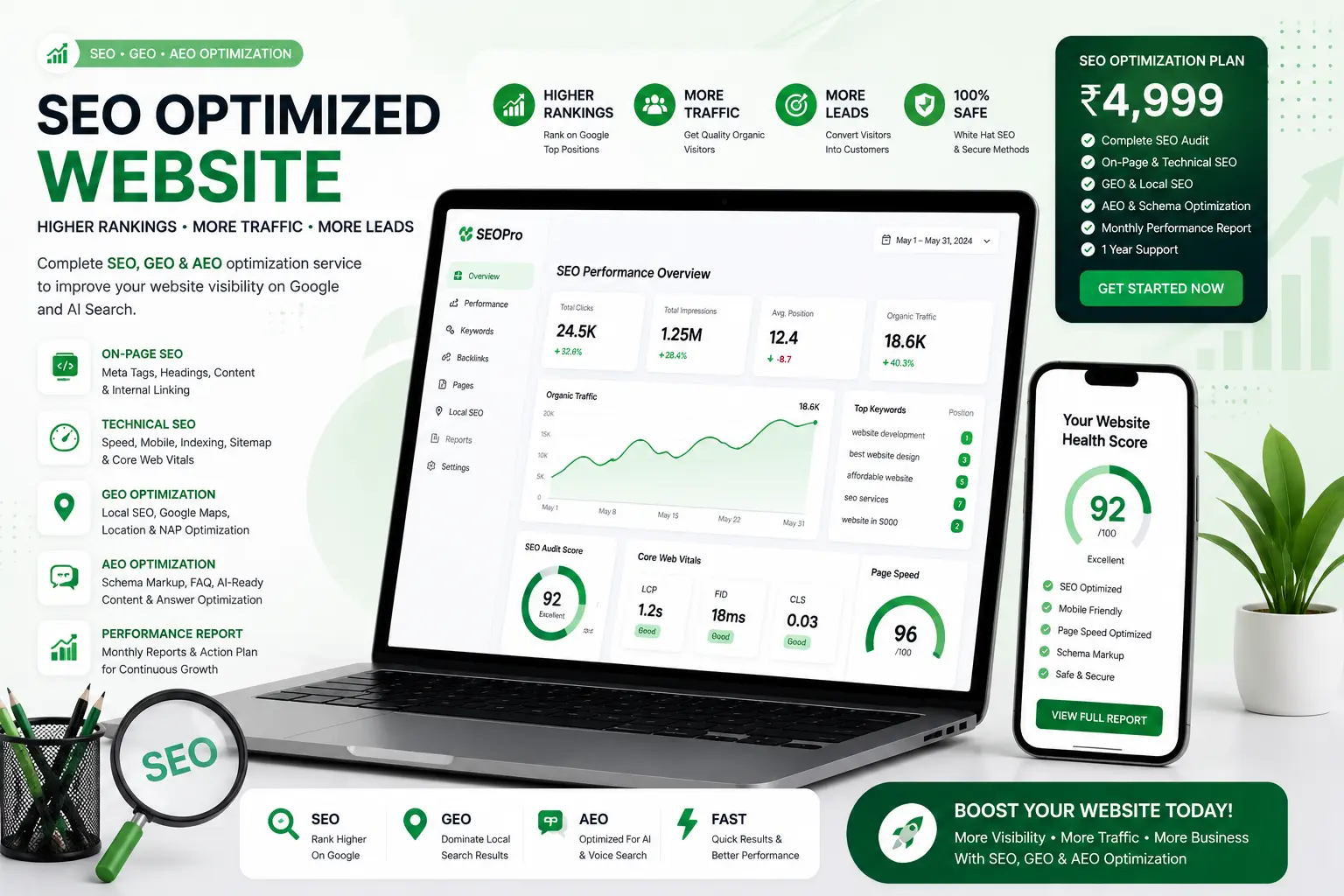
Practical guide to website SEO checklist for 2026: costs, technology choices, implementation checks, SEO cons…
Practical guide to AEO optimization checklist for websites: costs, technology choices, implementation checks,…
Practical guide to local SEO for service businesses in India: costs, technology choices, implementation check…
Practical guide to AI search visibility for small businesses: costs, technology choices, implementation check…